Pickleball for Visually Impaired Players: How the Game Is Adapted
Quick Answer: Visually impaired players play pickleball using a few key adaptations. The main one is an audible ball with bells inside so players can hear it move, usually described simply as adaptive or blind pickleball. Low-vision players may use bright, high-contrast balls instead. Other adaptations include tactile court markings, a sighted helper calling out the ball’s location, an uncluttered playing area, and verbal cues. It is a developing area of adaptive pickleball, so availability varies by program.
Pickleball can be adapted so players who are blind or have low vision can enjoy it too. Here is how the game is modified and what it takes to play.
If you have a health or vision condition, check with your doctor or an adaptive sports specialist about what suits you.
Can blind or visually impaired people play pickleball?
Yes, with sound-based adaptations. Vision is central to standard pickleball, so the adaptations focus on replacing visual tracking with sound and other cues.
How it is made possible:
- Audible balls, with bells or beepers inside, so players hear the ball move.
- High-contrast balls, in bright colors for players with some usable vision.
- Verbal cues, with a helper calling out the ball’s location and direction.
- An uncluttered court, to keep the playing area safe and predictable.
Sound replaces sight here. Once the ball makes noise, a visually impaired player can track and time it, which is the whole foundation of the adapted game.
What adaptations make it work?
Sound, contrast, and cues, tailored to vision. The right setup depends on whether a player is fully blind or has low vision. Programs mix these tools to fit the player.
The main adaptations:
- Audible balls for players who are blind, relying on hearing.
- Bright, high-contrast balls for players with low vision who can still see.
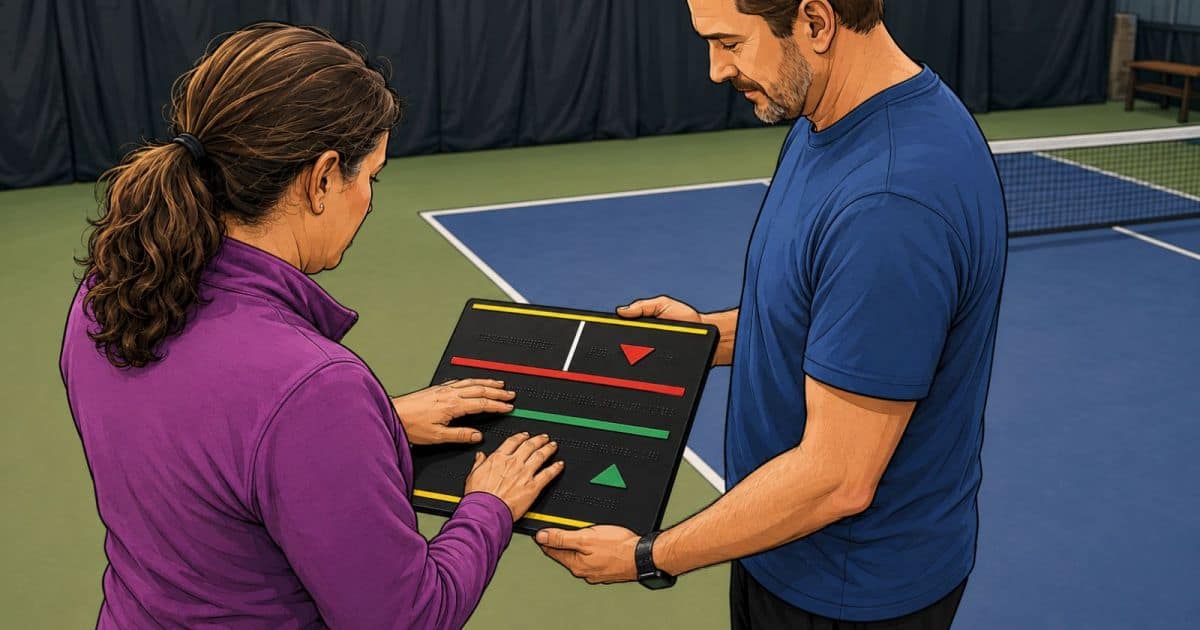
- Tactile court markings, to help orient players by feel.
- A sighted guide or caller, announcing the ball and the score.
- Adjusted pace, with slower, more communicative play.
There is no single established name for this format; it is usually described as adaptive or blind pickleball, played with an audible ball. It is still developing, so the exact format and equipment vary by program rather than following one fixed standard.
How do you get started?
Find a program and the right ball. Because this is an emerging area, getting started is mostly about connecting with the right people and equipment.
How to begin:
- Find an adaptive program, since visually impaired play is often run through inclusive or adaptive groups.
- Get an audible or high-contrast ball, from adaptive sports suppliers. See our guide on adaptive equipment.
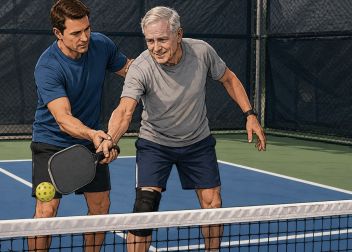
- Play with a sighted helper at first, to call the ball and score.
- Choose a quiet, uncluttered space, so the ball’s sound is easy to track.
- Connect with others, since the community is the best source of tips.
Patience helps, since this is a newer adaptation that programs are still refining. For the broader picture, see our guide on pickleball for people with disabilities, and find inclusive programs in our adaptive pickleball directory.
Frequently asked questions
Can blind or visually impaired people play pickleball? Yes. Players who are blind or have low vision play using audible balls (with bells inside), high-contrast balls, verbal cues from a sighted helper, and tactile court markings, often through adaptive programs.
Is there adaptive pickleball for the visually impaired? Yes, though it is a developing area. It is usually described as adaptive or blind pickleball, played with an audible bell ball and verbal cues, rather than under one established name. Availability and format vary by program.
What ball do visually impaired players use? Players who are blind use audible balls with bells or beepers inside so they can hear the ball, while low-vision players may use bright, high-contrast balls they can still see.
How does a blind player track the ball? By sound. An audible ball with bells lets the player hear its movement, and a sighted helper can call out its location and direction. An uncluttered, quiet court makes the sound easier to follow.
Do you need special equipment for visually impaired play? The key item is an audible or high-contrast ball, available from adaptive sports suppliers. Tactile court markings and a willing sighted helper round it out. Paddles and the net are standard.
Is visually impaired pickleball widely available? Not yet everywhere, since it is an emerging adaptation. Your best route is connecting with a local adaptive sports program or inclusive club that can provide equipment and guidance.
With sound and a few cues, players who are blind or have low vision can enjoy pickleball too. Explore the gear in our guide on adaptive equipment, get oriented with pickleball for people with disabilities, and find inclusive programs in our adaptive pickleball directory.
Written by the Pickler Junction Team.
*This article is general information, not medical advice. Talk with your doctor about your own health before starting a new sport.