Concrete vs. Asphalt: Which Base Is Right for Your Pickleball Court?
Quick Answer: Concrete is the more durable, lower-maintenance base, lasting longer with fewer cracks, though it costs more upfront. Asphalt is cheaper and faster to install and flexes well in cold climates, but it has a shorter lifespan of 8 to 15 years and cracks more readily. For most permanent courts, concrete is the better long-term value, while asphalt suits tighter budgets.
The base is the foundation of your court and the single biggest cost, so the concrete-versus-asphalt decision matters more than almost any other. Here is an honest comparison to help you choose.
What is the difference between concrete and asphalt bases?
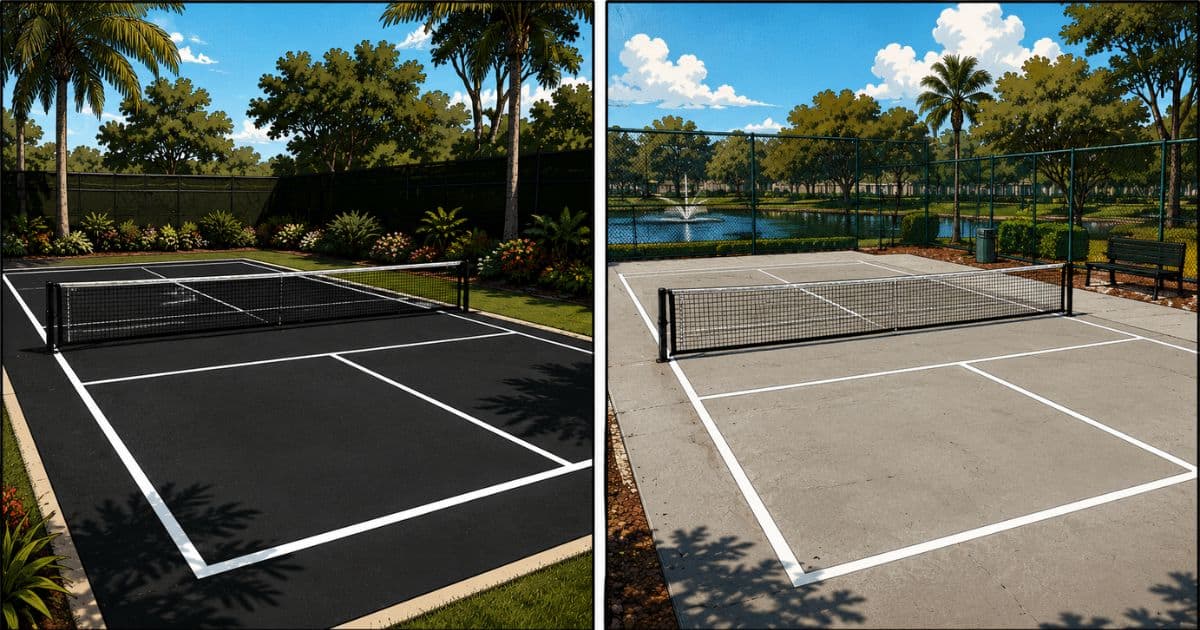
Concrete is rigid and durable; asphalt is flexible and cheaper. Both serve as the structural base under the acrylic playing surface, but they behave very differently over time.
The core differences:
- Concrete: a rigid, reinforced slab. More durable, lower maintenance, more expensive, longer install (curing time).
- Asphalt: a flexible paved base. Cheaper, faster to install, but shorter-lived and more crack-prone.
- Post-tension concrete: a premium concrete option with internal cables that resist cracking, offering the longest life.
- Both are topped with an acrylic surface coating for grip, color, and consistent bounce.
The choice turns on how long the court will last and how much maintenance it will need, with upfront price as only one input.
How do they compare on cost, durability, and maintenance?
Asphalt wins on price, concrete wins on longevity. Each material has clear trade-offs across the factors that matter most.
The comparison:
- Upfront cost: asphalt is cheaper; concrete costs more; post-tension concrete is the most expensive.
- Lifespan: asphalt lasts 8 to 15 years or less before major repairs, depending on climate, use, materials and subgrade; standard concrete 15 to 20 years; post-tension concrete 25 to 30 years.
- Maintenance: asphalt needs more frequent crack repair and resurfacing; concrete needs minimal upkeep.
- Cracking: asphalt cracks more readily over time; concrete can still crack from expansion unless post-tensioned.
- Climate: asphalt flexes better in cold and freeze-thaw; it can soften in extreme heat. Concrete handles heat well.
- Feel: asphalt is slightly softer underfoot; concrete is more rigid.
Over the full life of a court, asphalt’s lower upfront cost is often offset by higher maintenance, which is worth factoring into your decision.
Which base should you choose?
Concrete for longevity, asphalt for budget or cold climates. The right choice depends on your budget, climate, and how long you want the court to last without fuss.
Choose concrete (or post-tension concrete) if you:
- Want maximum durability and minimal maintenance.
- Are building a permanent, high-use court or commercial facility.
- Prefer to invest once for decades of service.
Choose asphalt if you:
- Have a tighter upfront budget.
- Are in a cold climate where flexibility resists freeze-thaw cracking.
- Accept more maintenance over time.
For most permanent backyard and facility courts, concrete is the better long-term value, with post-tension concrete the premium choice. Whichever base you pick, proper drainage and surface prep are essential. For surfacing on top, see our guide on choosing a court surface, and for budgeting, our cost to build guide. A court construction contractor can recommend the best base for your climate and site.
Frequently asked questions
Is concrete or asphalt better for a pickleball court? Concrete is more durable and lower-maintenance, lasting longer with fewer cracks, but costs more. Asphalt is cheaper and flexes well in cold climates but has a shorter life and needs more upkeep.
How long does each base last? Asphalt lasts 8 to 15 years or less before major repairs depending on climate and use, standard concrete 15 to 20 years, and post-tension concrete 25 to 30 years with proper care.
Is asphalt cheaper than concrete? Yes, asphalt is cheaper upfront and faster to install. However, its higher long-term maintenance can narrow or erase that savings over the court’s life.
What is post-tension concrete? It is concrete with internal tensioned cables that resist cracking, offering the longest lifespan (25 to 30 years) and lowest maintenance, at the highest upfront cost.
Which base is better in cold climates? Asphalt’s flexibility makes it more resistant to freeze-thaw cracking in cold climates, while concrete performs well in heat. Post-tension concrete resists cracking in most conditions.
Do both bases use the same surface? Yes. Both concrete and asphalt bases are topped with an acrylic surface coating that provides grip, color, and consistent ball bounce.
The base decision shapes your court’s lifespan and upkeep, so choose for the long run. Pair this with our guides on court surfaces and the cost to build, and let a court construction contractor recommend the right base for your site.
Written by the Pickler Junction Team.