Best Stretches After Playing Pickleball: Cool Down and Recovery Routine
Quick Answer: The best post-pickleball stretches are static holds for the muscles you just worked: calves, hamstrings, quads, hips, shoulders, and forearms. Spend 5 to 10 minutes cooling down with a short walk, then hold each stretch 20 to 30 seconds. Stretching while your muscles are warm helps reduce stiffness, supports flexibility, and aids recovery so you feel better for your next session.
A cool-down is gentle activity and stretching after exercise that helps your body transition back to rest. Unlike the warm-up, which uses moving stretches, the cool-down is where static holds belong, since your muscles are warm and ready to lengthen safely.
Why stretch after playing pickleball?
To ease stiffness and support recovery. After a session of lunging, reaching, and quick steps, your muscles are warm and slightly tight. A short cool-down helps them relax and recover, and it is the ideal time for the static stretching that improves flexibility over time.
What a post-play cool-down does:
- Gradually lowers your heart rate with light movement
- Reduces next-day stiffness in the muscles you worked
- Supports flexibility and range of motion over time
- Helps you feel recovered and ready for your next game
The honest reality: most players skip the cool-down and head straight to the car, then wonder why their calves are tight the next morning. Five minutes makes a real difference.
What is a good post-pickleball stretching routine?
Light movement first, then static holds for the key muscle groups. Walk for a couple of minutes to bring your heart rate down, then hold each stretch gently for 20 to 30 seconds without bouncing.
A simple routine:
- Calf stretch: press against a fence or wall, back leg straight, to release the calves and Achilles.
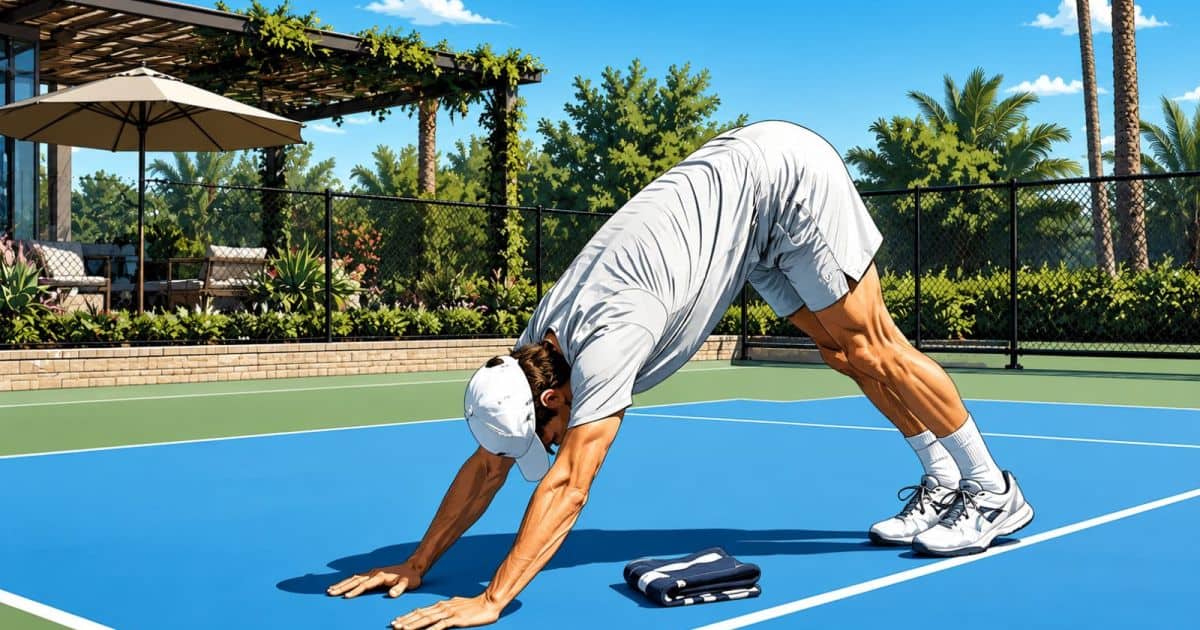
- Hamstring stretch: with a slight forward fold or seated reach, for the backs of the legs.
- Quad stretch: standing, heel toward glute, for the fronts of the thighs.
- Hip and glute stretch: a figure-four or gentle lunge stretch for the hips.
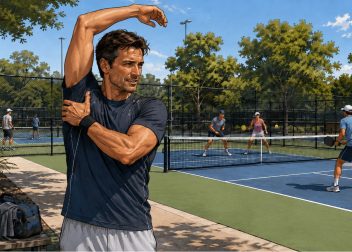
- Shoulder stretch: arm across the body, for the shoulders used overhead.
- Forearm and wrist stretch: gently extend and flex the wrist, for your paddle arm.
- Gentle torso twist: seated or standing, to release the back.
Hold each comfortably, never to the point of pain. This complements the dynamic warm-up routine you do beforehand.
How does stretching fit recovery overall?
It is one part of bouncing back well. Stretching helps, but full recovery also depends on a few other simple habits, especially as you play more often.
Round out recovery with:
- Hydration and a light snack to replenish after play
- Rest days between intense sessions, so tissues recover
- Off-court strength and mobility work, covered in our off-court workouts guide
- Listening to your body, easing off if something feels strained
If a particular area stays tight or sore beyond normal next-day stiffness, that is worth attention. A physical therapist can assess it and give you targeted stretches and strengthening.
Frequently asked questions
Should I stretch after playing pickleball? Yes. Static stretching after play, while your muscles are warm, helps reduce stiffness, supports flexibility, and aids recovery for your next session.
What stretches are best after pickleball? Calf, hamstring, quad, hip, shoulder, and forearm stretches target the muscles pickleball works most. Hold each gently for 20 to 30 seconds.
Is static or dynamic stretching better after playing? Static (holding) stretches are ideal after play, when muscles are warm. Save dynamic (moving) stretches for your warm-up before you play.
How long should I hold each stretch? About 20 to 30 seconds per stretch, done gently and without bouncing or pushing into pain.
Does stretching prevent soreness? The honest answer is that stretching has limited evidence for preventing next-day soreness. It can ease stiffness and it is pleasant, but hydration, rest and managing your playing load do more.
What if a muscle stays sore for days? Mild next-day stiffness is normal, but pain that lingers or worsens deserves attention. Rest it and consider seeing a physical therapist or your doctor.
A short cool-down keeps you limber and ready for the next round. Pair it with a solid warm-up and off-court conditioning. For nagging tightness or an old injury, a physical therapist can tailor a routine to you.
Written by the Pickler Junction Team.
*This article is general information, not medical advice. Talk with your doctor about your own health before starting a new sport.