Portable vs Permanent Pickleball Nets
Quick Answer: A portable pickleball net sets up in minutes, folds into a bag, and suits driveways, gyms, and shared courts. A permanent net is bolted in place for daily play and a dead-on regulation feel. Choose portable for flexibility and storage, and permanent for a fixed home or club court that sees heavy use.
A portable pickleball net is a freestanding, collapsible net system you can carry to any flat surface and set up without tools. A permanent net anchors into sleeves or a concrete footing and stays put. Both can meet regulation size. The right pick comes down to where you play, how often, and how much you want to haul around.
What is a portable pickleball net?
It is the net most rec players own first. A portable pickleball net uses a metal frame that snaps together, a fabric net, and feet that rest on the ground. You carry it in a shoulder bag, drop it on any flat spot, and you are playing in about five minutes.
The trade-offs are real, though. Portable nets are lighter, so a stiff wind can nudge them, and the center tends to sag a little more than a fixed net. Most decent ones weigh 20 to 35 pounds, which is enough to feel sturdy but still liftable for one person.
- Sets up almost anywhere: driveway, gym floor, empty tennis court, cul-de-sac
- Folds down for the trunk or a closet
- Costs less up front than pouring a permanent footing
- Can wobble in wind and needs occasional re-tensioning
How is a permanent net different?
A permanent net is built to stay. The posts drop into ground sleeves set in concrete, or they bolt to a fixed base, so the net keeps clean tension every single time. If you have a dedicated home court or you run a club, this is the setup that feels closest to a tournament.
The honest difference between the two shows up on the third shot drop. A tight permanent net gives the same predictable band height day after day, while a portable one needs a quick tug now and then. For a backyard court you plan to keep, permanent wins on feel. Planning that court is its own project, and the full guide to pickleball court dimensions walks through the footprint before you dig.
What net height do you actually need?
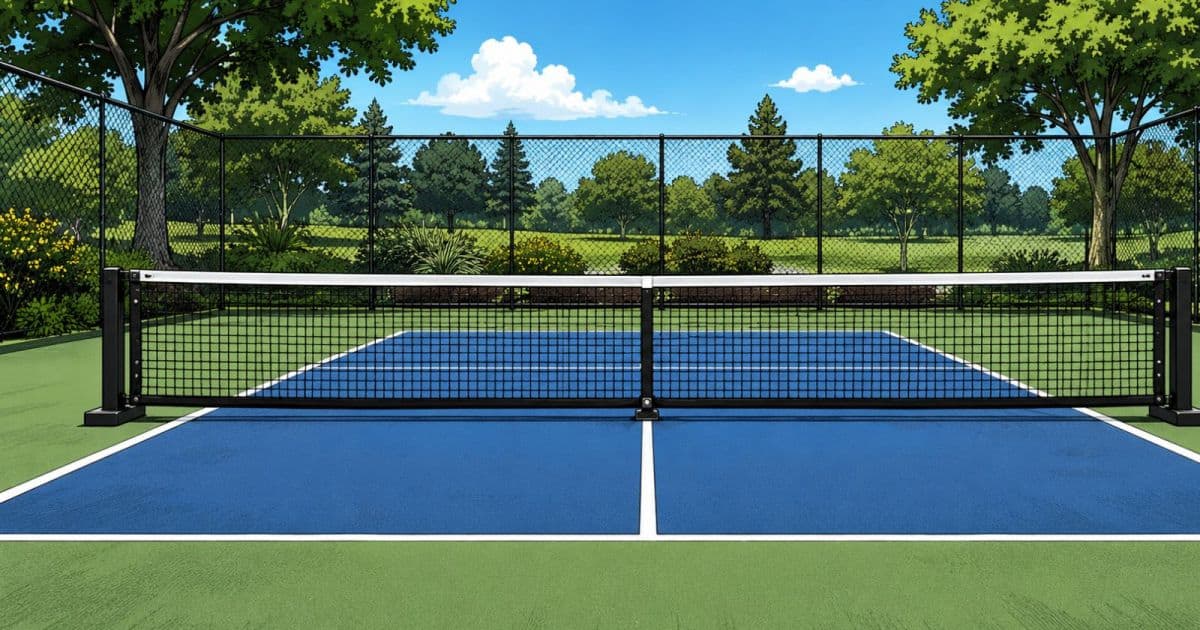
Both net types should hit the same regulation numbers, so height is not really the deciding factor. A regulation pickleball net is 36 inches high at the sidelines and 34 inches at the center. That two-inch dip is intentional and the same for portable and permanent nets.
If you are buying a temporary pickleball net for casual play, still check those measurements. Plenty of cheap sets run short or tall, and a net that is even an inch off changes how dinks and drives clear the tape. Bring a tape measure the first time you set one up.
Which one should you buy?
Match the net to your court, not the other way around. If you bounce between locations or share public courts, a portable net is the clear call. If you are converting a driveway or old tennis court into a lasting pickleball space, spend on a permanent system and enjoy the stable feel. Turning an existing court over is a common route, and converting a tennis court into a pickleball court covers the net anchoring step in detail.
Weather matters too. A portable net comes down fast when clouds roll in, which is handy if you are ever tempted to keep playing pickleball in the rain and then think better of it.
What to look for before you buy
A few things separate a net that lasts from one you replace in a season:
- Frame material: powder-coated steel holds up better outdoors than thin aluminum.
- Net fabric: a stiff bottom band and center strap keep the middle from sagging.
- Wheels or a carry bag: worth it if you move the net a lot.
- Footprint: measure your space, then add room for the sidelines and kitchen.
Buy the sturdiest option your budget and space allow, then take care of it. A wiped-down, dried net frame outlasts one left wet in a bag.
FAQ
How tall is a regulation pickleball net?
A regulation net is 36 inches high at the sidelines and 34 inches at the center. Portable and permanent nets both use these numbers, so measure yours after setup to be sure it is accurate.
Can I use a portable pickleball net for tournaments?
Sanctioned tournaments almost always supply their own nets, usually permanent or heavy tournament-grade portables. For club events and rec play, a quality portable net is fine as long as it meets the height rules.
How long does it take to set up a portable net?
Most portable nets go up in three to five minutes once you have done it a couple of times. The first setup takes longer while you learn how the frame snaps together.
Will a portable net blow over in the wind?
A light one can shift or tip in strong gusts. Heavier frames with a center support and wide feet stay put better, and some players weight the base with a sandbag on windy days.
Are permanent nets worth it for a home court?
If you play often on a dedicated court, yes. The consistent tension and clean height feel closer to tournament conditions, and you skip the daily setup.
What is the difference between a temporary and portable pickleball net?
People use the terms interchangeably. Both mean a freestanding net you can move and store. Permanent nets are the opposite, anchored in place and not meant to travel.
Can one net cover both pickleball and tennis?
Some adjustable nets try to, but the heights and widths differ enough that a dedicated pickleball net plays better. If you share a court, a proper portable pickleball net is the cleaner solution.
If your next step is a court of your own, browse the court construction category and the gear category in the Pickler Junction directory to compare net systems and builders before you commit.
Written by the Pickler Junction Team.