Pickleball Paddle Weight Chart: What the Numbers Mean and How to Choose
Quick Answer: Pickleball paddles fall into three weight categories: lightweight (under about 7.3 ounces), midweight (about 7.3 to 8.4 ounces), and heavyweight (about 8.5 ounces and up). Lighter paddles give faster hand speed and control, while heavier paddles give more power and stability. Midweight is the most popular because it balances both.
Paddle weight is the single spec that most changes how a paddle feels, so getting it right matters. Here is a simple weight chart, what the numbers mean, and how to choose. Paddle weight is how heavy the paddle is, usually listed in ounces, and it drives the trade-off between power and hand speed.
What weight pickleball paddle should I use?
It depends on the power-versus-control trade-off. Weight determines whether a paddle feels quick and controllable or powerful and stable. Here is the standard chart.
The three weight categories:
- Lightweight (under about 7.3 oz): fast hand speed, quick reactions, and fine control. Easier on the arm, but less power and stability.
- Midweight (about 7.3 to 8.4 oz): the balanced, most popular range. A blend of power, control, and maneuverability.
- Heavyweight (about 8.5 oz and up): maximum power and stability with less swing effort. Slower hands and more arm fatigue.
- Where most land: around 7.5 to 8 ounces, the versatile middle.
Weight is a trade-off dial, not a quality rating. Lighter trades power for speed; heavier trades speed for power. The chart just shows where each choice lands.
What do the numbers actually mean for your game?
Power, speed, and comfort shift with weight. The differences are real on court, so it helps to know what each direction does before you choose.
What changes with weight:
- Power: heavier paddles generate more pace with less swing effort.
- Hand speed: lighter paddles react faster at the kitchen line.
- Control and touch: lighter paddles favor dinks and resets.
- Stability: heavier paddles are steadier on off-center hits.
- Arm strain: heavier paddles can increase fatigue, though they absorb more shock.
There is also a nuance the chart hides: two paddles of the same listed weight can feel different depending on where the mass sits, sometimes called swing weight. The listed number is “static” weight, measured before grip or tape, usually with a small tolerance of about plus or minus 0.2 ounces.
How do you choose the right weight?
Match it to your play style and body. The best weight is personal, so use the chart as a starting point and adjust from there.
How to choose:
- Newer players: start midweight for balance and forgiveness. See our guide on paddle weight for beginners.
- Net and finesse players: lean lighter for hand speed.
- Power and baseline players: lean heavier for plow-through.
- Arm concerns: test both directions, since comfort is individual.
- Test before tuning: play a weight class for a few sessions before adjusting.
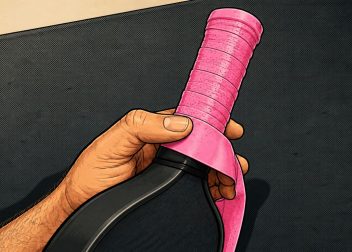
If a paddle is close but not perfect, you can fine-tune it with tape rather than buying again. See our guide on adding weight to a pickleball paddle. To compare options, browse our gear directory.
Frequently asked questions
What weight pickleball paddle should I use? It depends on your style. Lightweight (under about 7.3 oz) suits fast hands and control, heavyweight (about 8.5 oz+) suits power, and midweight (about 7.3 to 8.4 oz) balances both. Most players do best starting midweight.
How do I choose pickleball paddle weight? Start with the midweight range for balance, then lean lighter for hand speed and touch or heavier for power and stability. Test a weight class for a few sessions, and consider your arm comfort before committing.
What is the most popular pickleball paddle weight? The midweight range, roughly 7.3 to 8.4 ounces (with many players around 7.5 to 8 ounces), is the most popular because it balances power, control, and maneuverability for a wide range of players.
Is a heavier or lighter paddle better? Neither is universally better. Heavier paddles offer more power and stability with less effort, while lighter paddles offer faster hands and finer control. The right choice depends on your style and comfort.
What is the difference between static and swing weight? Static weight is the number on the spec sheet, measured before grip or tape. Swing weight is how heavy the paddle feels in motion, based on where the mass sits. Two paddles with the same static weight can swing very differently.
Does paddle weight affect your arm? It can. Heavier paddles increase fatigue and torque on off-center hits, though they also absorb more shock. Players with elbow concerns often test lighter paddles, but comfort is individual, so try both directions.
Use the weight chart as a starting point, then fine-tune to your game. Get the beginner-specific answer in our guide on paddle weight for beginners, learn to customize with adding weight to a paddle, and browse our gear directory.
Written by the Pickler Junction Team.