Pickleball Paddle Grip Tape: Overgrips, Replacement Grips, and When to Change Them
Quick Answer: Grip tape comes in two forms. An overgrip is thin tape, about 0.4 to 0.6 mm, that wraps over your existing grip for tack and sweat control. A replacement grip is thicker, 1.5 to 1.8 mm, and replaces the handle grip entirely. Overgrips cost roughly $3 to $8 depending on whether you buy singles or a multi-pack, and get changed every few weeks.
Grip tape is the cheapest thing on your paddle and the part you touch every single shot. It is also the piece most players ignore until the paddle starts slipping mid-rally. Here is the difference between the two types and how often each needs changing.
What is the difference between an overgrip and a replacement grip?
Thickness and what they sit on. That one distinction drives everything else.
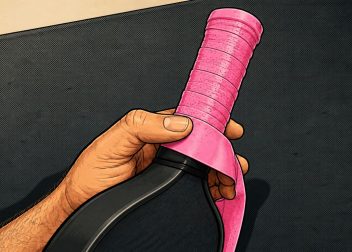
An overgrip is a thin tape, roughly 0.4 to 0.6 mm, that wraps over the grip already on your paddle. It adds tack, absorbs sweat, and barely changes the handle size. It is consumable by design.
A replacement grip is thicker, about 1.5 to 1.8 mm, and it takes the place of the original grip on the handle. You strip the old one off and wrap this on instead.
The practical rule is simple:
- Original grip still intact, you just want fresh tack: use an overgrip.
- Original grip peeling, cracked, or worn flat: replace it.
- Handle feels too thin: a replacement grip, or an overgrip over the existing one, adds size.
How often should you change grip tape?
Far more often than most players do, for overgrips at least.
An overgrip is built to be replaced every two to four weeks of regular play. Measured in sessions, expect somewhere between 5 and 15 from one, depending mostly on how much you sweat and whether you play in humidity.
A replacement grip lasts far longer. Once or twice a year is typical for most players, since it is not absorbing the daily wear that the overgrip on top of it takes.
Do not wait for the grip to fail. A slipping paddle does not announce itself politely. It shows up as a mishit in the middle of a point, and by then you have been gripping tighter for a week to compensate, which is its own problem for your forearm.
Does grip tape actually change how the paddle plays?
Yes, in three ways worth knowing about.
- Handle size. Each wrap adds circumference. A grip that is too small encourages over-squeezing, which contributes to forearm fatigue and can feed into pickleball elbow. Too large and you lose wrist mobility on quick hands exchanges.
- Tack versus cushion. Tacky overgrips give a locked-in feel and suit dry hands. Cushioned or perforated ones absorb more sweat and suit humid conditions or heavy sweaters.
- Weight. It is small, but a replacement grip adds noticeably more handle weight than an overgrip. If you have already balanced your paddle deliberately, changing grip type shifts that balance slightly.
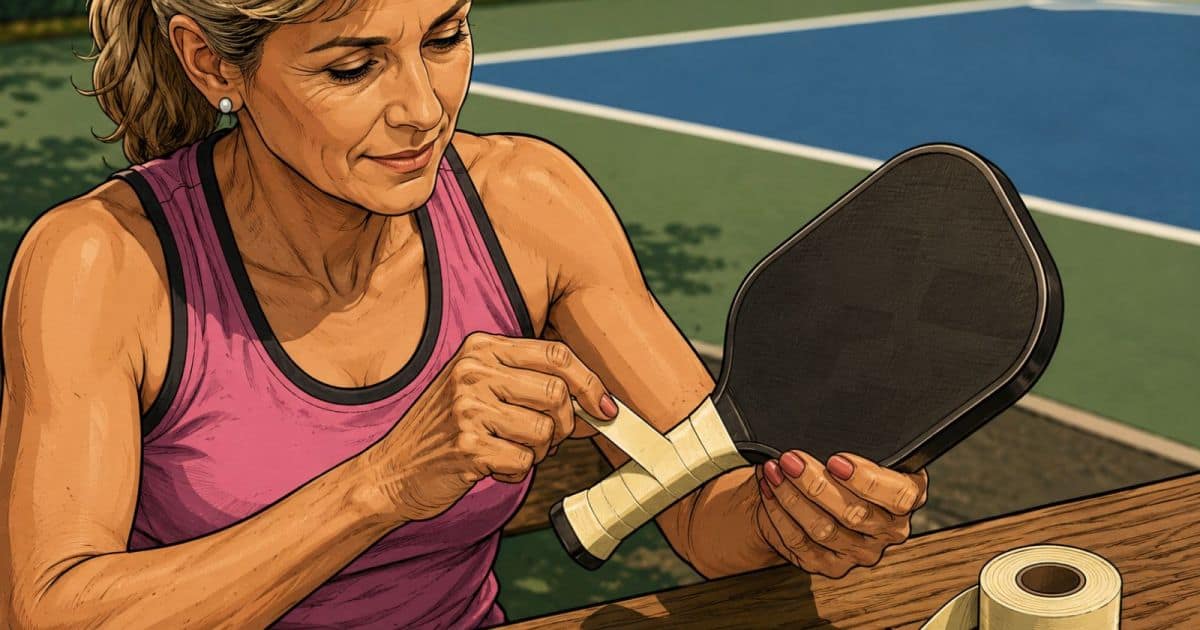
At roughly $3 to $8 a wrap and about two minutes to apply, an overgrip is the cheapest meaningful change you can make to a paddle. It is worth experimenting with a few types before concluding you need a different paddle entirely. Our guide to choosing a paddle covers when the paddle really is the problem.
How do you keep grips lasting longer?
Store and clean the paddle properly, and stop sweat from soaking in.
- Keep a spare in your bag. Changing a grip courtside takes two minutes. Our bag guide covers what else belongs in there.
- Dry your hands between games rather than relying on the grip to absorb everything.
- Do not leave the paddle in a hot car. Heat degrades adhesive and the paddle face alike.
- Wipe the handle down when you change grips, which our guide on cleaning your paddle covers.
Frequently asked questions
What is the difference between an overgrip and a replacement grip? An overgrip is thin tape, about 0.4 to 0.6 mm, that wraps over your existing grip. A replacement grip is thicker, 1.5 to 1.8 mm, and replaces the handle grip entirely.
How often should I change my overgrip? Every two to four weeks of regular play, or roughly every 5 to 15 sessions depending on how much you sweat and how humid your conditions are.
How often should I change a replacement grip? Most players do it once or twice a year, since the overgrip above it takes most of the daily wear.
How much does grip tape cost? An overgrip typically costs roughly $3 to $8 depending on whether you buy singles or a multi-pack, and takes about two minutes to apply, which makes it the cheapest upgrade available for a paddle.
Does grip tape change the paddle’s handle size? Yes. Every wrap adds circumference. That matters, because a grip that is too small encourages over-gripping and a grip that is too large limits wrist mobility.
Can I put an overgrip over my existing grip? That is exactly what it is designed for. Only strip the original grip when it is peeling, cracked, or worn flat.
Should I use a tacky or a cushioned grip? Tacky suits dry hands and a locked-in feel. Cushioned or perforated grips absorb more sweat and work better in humidity.
Grip tape is small, cheap, and disproportionately important to how a paddle feels. Change it on a schedule rather than when it fails, and browse gear specialists in our pro shops and retailers directory.
Written by the Pickler Junction Team.