Pickleball Open Play Etiquette: The Unwritten Rules for Showing Up and Rotating In
Quick Answer: Open play etiquette is the set of unwritten rules that keep drop-in sessions fair and welcoming: use the paddle queue honestly, rotate off after your game so others get on, mix with different players rather than stacking with friends to dominate, play to the session’s skill level, welcome newcomers, and call lines fairly and generously. Follow these and you will be invited back into games quickly. Ignoring them gets noticed fast.
Open play runs on courtesy more than rules, and newcomers who learn the etiquette fit in immediately. Here are the unwritten rules for showing up and rotating in. For how the rotation itself works, see our guide on what open play is.
What is the etiquette for showing up?
Arrive ready, learn the system, and be friendly. First impressions matter at open play. A little preparation and courtesy get you into games faster.
When you arrive:
- Learn the paddle queue before jumping in, so you rotate in correctly.
- Introduce yourself, especially as a newcomer, since a quick hello helps.
- Be honest about your level, so games are matched fairly.
- Come ready to play, with court shoes, water, and your paddle.
- Respect the session type, whether it is beginner, all-levels, or by skill.
Open play runs on community norms. Show up friendly and follow the queue, and regulars will fold you in quickly.
How do you rotate in fairly?
Use the queue honestly and rotate off promptly. The rotation only works if everyone respects it. Fair rotation is the single most important part of open play etiquette.
The rotation rules:
- Queue your paddle honestly, taking your turn rather than jumping the line.
- Rotate off after your game, returning your paddle to the back so others play.
- Avoid stacking with friends to keep winning and hog a court.
- Mix with different players, which is the spirit of open play.
- Sit out gracefully when courts are full, without hovering or complaining.
Rotating off promptly is the golden rule. Winning and staying on freezes out everyone waiting, freezing out everyone waiting. This is closely related to public-court courtesy; see our guide on court sharing etiquette.
How do you play well with others?
Be generous, communicative, and welcoming. Once you are on the court, good etiquette keeps games fun for everyone, regardless of who wins.
On-court courtesy:
- Call lines fairly, giving the benefit of the doubt to your opponent.
- Communicate with your partner, on the middle ball and positioning.
- Adjust to mixed levels, dialing back power against clear beginners.
- Welcome newcomers, since someone once did the same for you.
- Keep it light, since open play is recreational, not a championship.
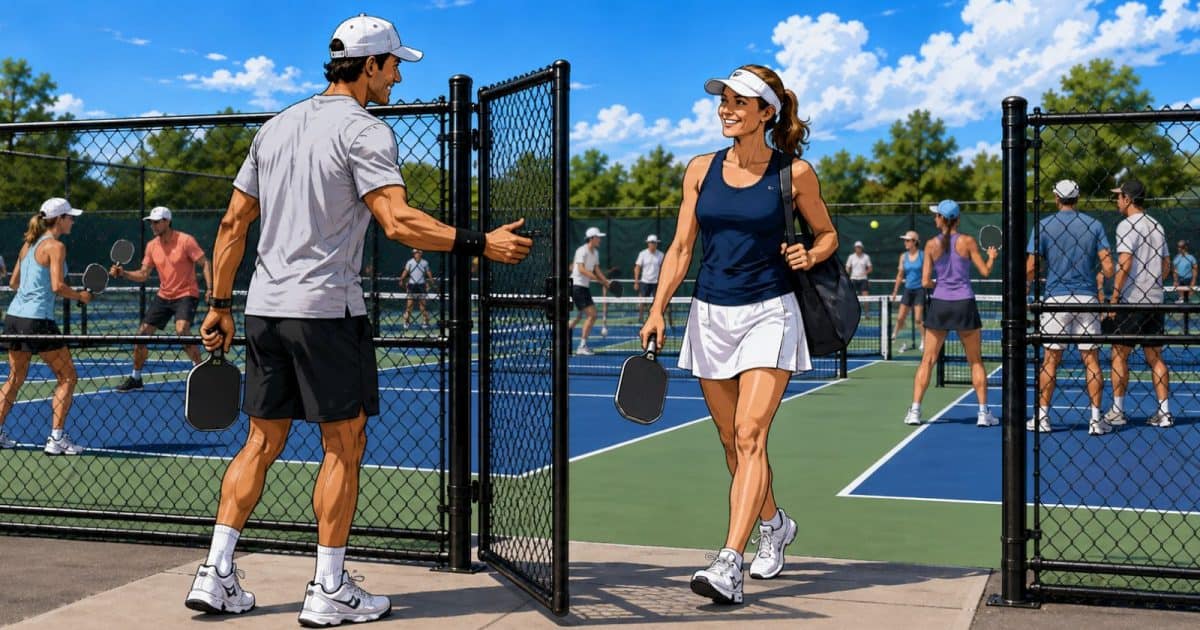
- Help with balls and gates, the small courtesies that mark a good regular.
Generosity is remembered. Friendly, fair, and easygoing play earns more invitations than grinding every point. To match yourself to the right session, see our guide on skill levels explained, and find open play in our clubs directory.
Frequently asked questions
What is the etiquette for pickleball open play? Use the paddle queue honestly, rotate off after your game so others get on, mix with different players, play to the session’s level, call lines fairly, and welcome newcomers. Courtesy keeps drop-in play fair and fun.
How do you rotate in at open play? Add your paddle to the queue (a rack or line) to mark your place in line. When your paddle reaches the front, you and the next three form a four and play. After your game, return your paddle to the back of the queue.
Is it rude to stay on the court after winning? At most open play, yes. The norm is to rotate off after your game so waiting players get on. Staying on to keep winning (“holding the court”) frustrates everyone in the queue.
Can I play open play with my friends? Yes, but mix it up. Open play is about playing with different people, so avoid stacking with friends every game to dominate a court. Pair off and rotate with others too.
How should I handle line calls at open play? Call your own side fairly and give opponents the benefit of the doubt on close calls. Open play is recreational, so generosity and good sportsmanship matter more than winning a point.
What if I am much better or worse than others on the court? Adjust. Stronger players should dial back power and keep balls in play against beginners, and newer players should communicate and keep trying. Skill-matched sessions help, so pick the right one.
Good open play etiquette gets you welcomed back game after game. Learn the rotation in our guide on what open play is, brush up on court sharing etiquette, and find a friendly session in our clubs directory.
Written by the Pickler Junction Team.