Can You Practice Pickleball by Yourself? Solo Drills and Training Methods That Work
Quick Answer: Yes, you can practice pickleball by yourself and improve a lot. The best solo methods are wall drills (hitting dinks, volleys, and resets against a wall), serve practice to targets, footwork and shadow drills, and using a ball machine if you have one. You can also build fitness and balance off-court. Solo practice is ideal for grooving technique and consistency, since you control the repetition without needing a partner.
You do not need a partner or even another player to get better at pickleball. Plenty of skills improve fastest through focused solo work. Here are the solo drills and training methods that actually work.
Can you play pickleball alone?
You can practice alone, even if you cannot play a full game. A real game needs at least two players, but a huge amount of improvement comes from solo practic e, where you control the repetition and focus.
What solo practice is great for:
- Grooving technique, through high-volume repetition.
- Building consistency, the foundation of good pickleball.
- Working on weaknesses, without the pressure of a match.
- Conditioning and footwork, on your own schedule.
The honest summary is that solo practice is underrated. You cannot replicate a real game, but you can build the clean, repeatable strokes that win games, and you can do it anytime.
What are the best solo pickleball drills?
Wall drills, serve practice, and footwork. A few solo methods deliver most of the benefit. The wall is your most valuable practice partner.
The top solo drills:
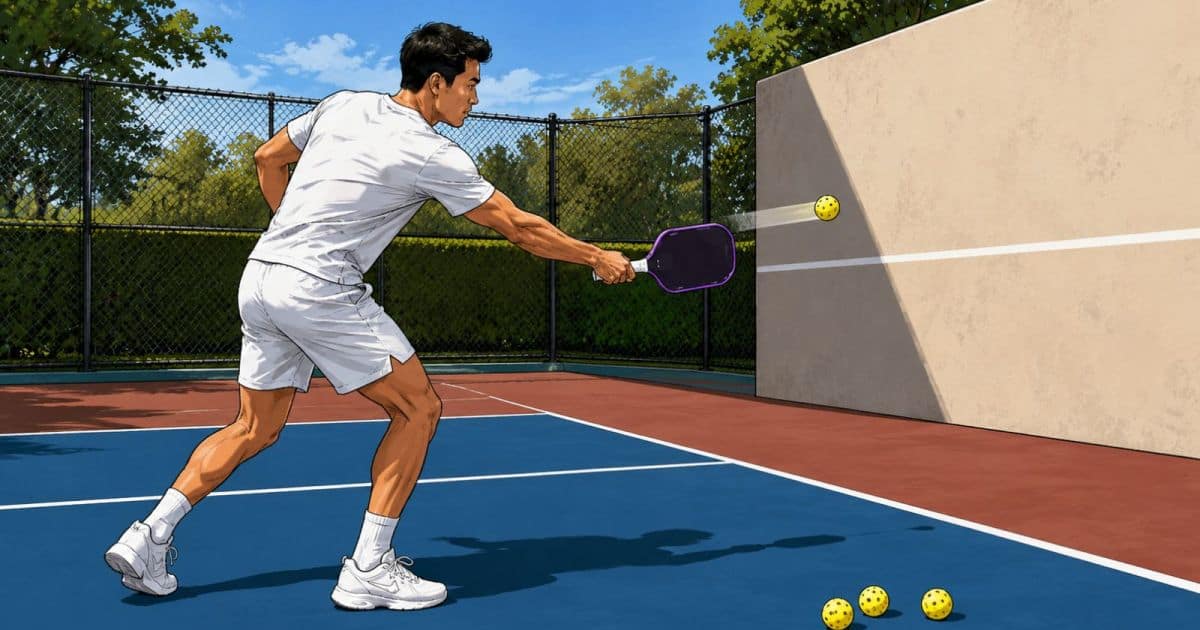
- Wall drills: hit against a wall to practice dinks, volleys, resets, and groundstrokes. The wall returns everything, giving endless reps. Mark a net-height line for realism.
- Serve practice: set up targets in the service court and groove a consistent, accurate serve. No partner needed.
- Footwork and shadow drills: move through the ready position, split step, and shot footwork without a ball.
- Drop and hit: drop a ball and practice your third shot drop or groundstrokes. See our guide on the third shot drop.
- Ball machine: if you have access to one, it feeds consistent balls for any shot.
The wall is the star here. A consistent wall session sharpens your dinks, resets, and reaction time better than almost anything else you can do alone.
How do you build a solo practice routine?
Mix skills, footwork, and fitness. A good routine balances technical reps with movement and conditioning. Even 20 to 30 minutes is valuable.
A simple solo routine:
- Warm up, with light movement and stretches. See our warm-up guide.
- Wall work, alternating dinks, volleys, and resets.
- Serve targets, practicing placement and consistency.
- Footwork drills, on movement and positioning.
- Off-court fitness, for agility, balance, and endurance. See our guide on off-court workouts.
Consistent solo practice between games is one of the fastest ways to improve. For more on accelerating your game, see our guides on how to improve fast and drills for beginners, and find a coach in our coaches directory.
Frequently asked questions
Can you play pickleball alone? You cannot play a full game alone, but you can practice alone very effectively. Wall drills, serve practice, footwork, and a ball machine all let you improve without a partner.
How do you practice pickleball by yourself? The best methods are wall drills (dinks, volleys, resets), serve practice to targets, footwork and shadow drills, drop-and-hit groundstrokes, and using a ball machine if available, plus off-court fitness.
What is the best solo pickleball drill? Wall drills are the most valuable. Hitting against a wall gives endless repetition for dinks, volleys, resets, and reaction time, and you can mark a net-height line for realism.
Can you really improve practicing alone? Yes. Solo practice is excellent for grooving technique and consistency through high-volume repetition, which are the foundations of good pickleball. It complements playing real games.
Do you need a ball machine to practice alone? No. A wall and a few balls are enough for most solo work. A ball machine is helpful for feeding consistent shots, but it is optional, not required.
How long should a solo practice session be? Even 20 to 30 minutes is valuable. A good session mixes a warm-up, wall work, serve practice, footwork, and some off-court fitness.
Solo practice is one of the most effective and overlooked ways to improve. Build your skills with our guides on drills for beginners and the third shot drop, and find a coach in our coaches directory.
Written by the Pickler Junction Team.