
What Is Open Play in Pickleball? How It Works and What to Expect Your First Time
Quick Answer: Open play is drop-in pickleball where anyone can show up and join games without a fixed partner or reservation. Players form groups of four, play a standard game to 11, then rotate so people mix and everyone gets court time. You typically add your paddle to a queue (the “paddle stack”) to signal you are next. It is the most common way people play recreationally, and it is beginner-friendly once you know the rotation.
Open play is the heart of recreational pickleball, but it confuses newcomers who are not sure how to join in. Here is how it works and what to expect your first time.
How does open play work?
Show up, queue your paddle, rotate in. Open play is unstructured in that there are no fixed teams, but it runs on a simple rotation system so everyone gets to play. Once you see it once, it clicks.
The basic flow:
- Drop in during the posted open-play hours, no reservation needed.
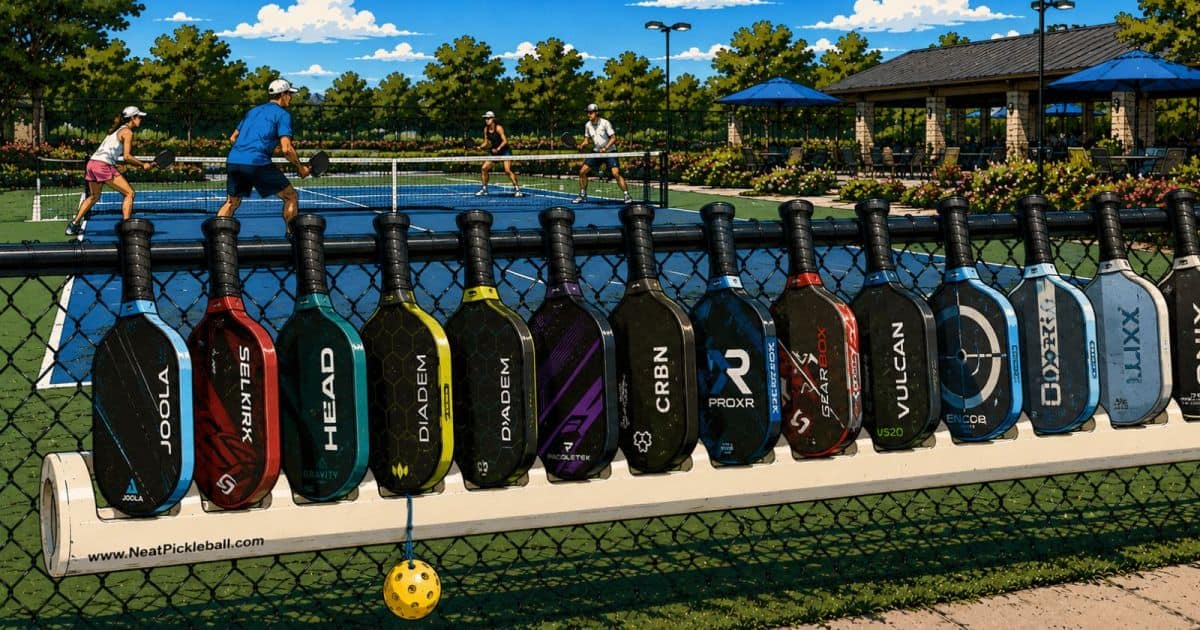
- Add your paddle to the queue (often a rack or line) to mark that you are waiting.
- Form a four when your paddle reaches the front, then play a game to 11.
- Rotate off when the game ends, returning your paddle to the back of the queue.
For a first-timer, the paddle queue is the whole secret. Once you understand that your paddle in the rack means “I am next,” open play stops feeling intimidating.
What should you expect your first time?
A friendly, fast-moving rotation. Your first open play can feel busy, but it is usually welcoming. Knowing the rhythm ahead of time helps you relax and enjoy it.
What to expect:
- Standard games to 11, win by 2, which keeps the rotation moving.
- Mixed partners, since you often play with whoever is up next.
- A range of skill levels, sometimes split into separate courts or sessions.
- Some waiting, between games when courts are busy.
- Casual scoring and friendly calls, especially at recreational sessions.
The mixing is the point. You will play with and against many different people, which is great for improving and meeting players. Sessions are often grouped by skill, so check whether yours is. See our guide on skill levels explained.
How do you join in as a beginner?
Introduce yourself and follow the queue. Beginners are welcome at most open play, especially beginner or all-levels sessions. A little courtesy goes a long way.
How to jump in:
- Pick the right session, ideally beginner or all-levels if you are new.
- Add your paddle to the queue and watch how the rotation works.
- Introduce yourself, since players are usually happy to help newcomers.
- Communicate with your partner on who takes the middle and which side you start.
- Learn the etiquette, covered in our guide on open play etiquette.
Do not worry about being new. Groups remember being beginners and will help you find your footing. To find open play near you, browse our clubs directory.
Frequently asked questions
What is open play in pickleball? Open play is drop-in pickleball where anyone can show up and join games without a fixed partner or reservation. Players form fours, play short games, and rotate so everyone gets court time.
How does open play work? You drop in during posted hours, add your paddle to a queue to mark that you are waiting, form a group of four when you reach the front, play a game to 11, then rotate off and re-queue.
What is the paddle stack? The paddle stack (or queue) is the rack or line where waiting players place their paddles to signal they are next. When your paddles reach the front, you are up for the next available court.
Is open play good for beginners? Yes, especially beginner or all-levels sessions. Open play is the most common way to get court time, meet players, and improve, since you rotate through many partners and opponents.
Do you need a partner for open play? No. That is the point of open play: you show up solo or with others and get matched into games through the rotation, playing with different partners each game.
How long are open play games? Usually to 11 points, win by 2, to keep the rotation moving so waiting players get on quickly. Some sessions cap games by time or use a lower target when courts are crowded.
Open play is the easiest, most social way to get on a court. Get comfortable with the rotation using our guide on open play etiquette, check your level with skill levels explained, and find a session in our clubs directory.
Written by the Pickler Junction Team.